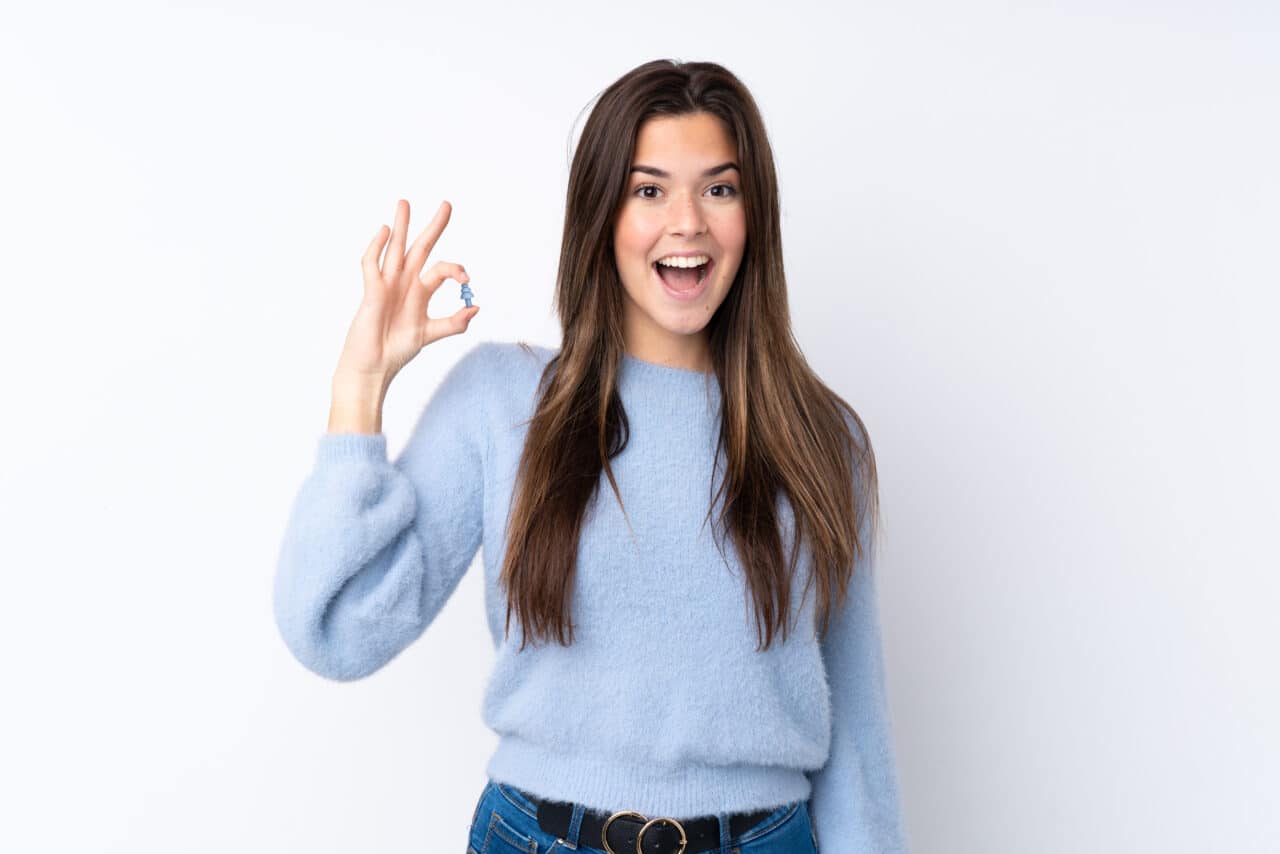
Custom earplugs can be worth it for some festival-goers, but they are not the right choice for everyone. Custom-molded earplugs offer a precise fit and excellent sound quality, but they come with a high price tag and require a visit to an audiologist. For most regular festival-goers, a well-designed universal high-fidelity earplug delivers comparable sound clarity and strong hearing protection at a fraction of the cost. The right answer depends on how often you go, what you value most, and how much you want to spend.
What are custom earplugs and how do they work?
Custom earplugs are hearing protection devices made from a mold of your specific ear canal. An audiologist takes an impression of your ear, sends it to a lab, and a pair of earplugs is fabricated to match your exact shape. The result is a snug, personalized fit that sits comfortably in your ear without needing to be pressed or twisted into place.
Most custom festival earplugs use what are called acoustic filters. These filters are designed to reduce sound evenly across frequencies, meaning you hear the same balance of bass, mids, and highs as you would without protection. The music just sounds a little quieter. Common filter options typically offer attenuation levels around 9 dB, 15 dB, or 25 dB, depending on how loud the environment is and how long you plan to be in it.
Because the fit is tailored to your ear, custom earplugs tend to stay in place reliably throughout a long set. They also tend to be more comfortable for extended wear compared to foam or standard silicone options that can cause pressure or irritation over time.
How do custom earplugs compare to universal earplugs for festivals?
The main difference between custom and universal earplugs comes down to fit and filter quality. Custom earplugs are built around your ear, which means the seal is consistent every time you put them in. Universal earplugs use a one-size-fits-most approach, typically with a layered or flanged design that adapts to different ear canal sizes.
For hearing protection at festivals, both types can do the job well when they use a proper acoustic filter. The real gap between them is not always as wide as people assume. A poorly fitted custom earplug can actually perform worse than a quality universal earplug. On the flip side, a universal earplug made from low-quality foam or basic silicone will muffle sound and reduce high frequencies far more than low ones, leaving music sounding dull and unbalanced.
The honest comparison is not custom versus universal. It is high-fidelity versus standard. A high-fidelity universal earplug with a well-designed acoustic filter will preserve sound quality in a way that basic foam earplugs simply cannot match. For most festival-goers, that is the more relevant distinction.
Are custom earplugs actually better for sound quality?
In theory, yes. Custom earplugs with flat-response acoustic filters are designed to reduce all frequencies evenly, so music sounds natural and clear rather than muffled. Because the fit is precise, there is less variation in how the seal performs, which means the filter does its job consistently.
In practice, the sound quality you experience depends heavily on the filter itself and how well the earplugs are fitted. Research in audiology has consistently shown that a poorly fitted custom earplug can sound worse than a quality over-the-counter option. A well-fitted one, on the other hand, is genuinely impressive. Live music that would otherwise be painfully loud is brought into a comfortable range without losing the richness of the sound.
The key takeaway is that sound quality is driven by filter design first and fit second. A universal earplug built around a high-quality acoustic filter, made from a material that creates a reliable seal, can deliver sound clarity that rivals custom options for most listeners in most festival environments.
How much do custom earplugs cost compared to universal ones?
Custom earplugs for music typically cost anywhere from $150 to $300 or more, depending on the audiologist, the lab, and the filter level you choose. That price usually includes the consultation, the ear impressions, and the fabrication of the devices. Some audiologists also offer follow-up fittings to make sure the earplugs perform correctly.
Universal high-fidelity earplugs, by contrast, range from around $15 to $50 for a quality pair. That is a significant difference, and it matters when you are weighing whether the upgrade is genuinely worth it for your situation.
When thinking about cost, it helps to consider how you will actually use them. If you attend festivals regularly throughout the year, the cost per use of a durable universal earplug drops quickly. A well-made pair designed for reuse over at least a full year gives you strong protection and clear sound at a cost that is easy to justify. Custom earplugs make more economic sense if you are a working musician, a sound engineer, or someone who spends dozens of hours a year in loud environments where absolute consistency matters.
Who should actually invest in custom earplugs?
Custom earplugs make the most sense for people whose hearing is genuinely at risk on a frequent, professional basis. Musicians who perform regularly, audio engineers who work live events, and DJs who spend hours in front of speakers every week are the clearest candidates. For these individuals, the investment in a precisely fitted, consistently performing device is a practical one.
If you attend a handful of festivals per year and want to protect your hearing without sacrificing the experience, custom earplugs are not a requirement. The benefits they offer over a quality universal option are real but marginal for casual to regular festival use. The more important decision is simply choosing to wear hearing protection at all, and choosing a type that uses a proper acoustic filter rather than basic foam.
It is also worth noting that custom earplugs require a visit to a hearing care professional. That adds time, scheduling, and cost to the process. For someone who wants solid festival ear protection without those barriers, a well-designed universal earplug is a practical and effective choice.
What should you look for in festival earplugs?
Whether you go custom or universal, a few features make a real difference when choosing earplugs for festivals.
- A flat-response acoustic filter. This is the single most important feature. A good filter reduces volume without cutting high frequencies more than low ones, so music sounds balanced rather than muffled. Foam earplugs do not do this. Look for earplugs specifically designed for music or live events.
- A reliable seal. The earplug needs to sit securely in your ear canal to do its job. A layered or mushroom-shaped universal design adapts to different ear shapes and stays in place through movement and dancing.
- Comfortable material. You will be wearing these for hours. Soft, hypoallergenic materials reduce irritation and pressure, especially for people with sensitive ears. Synthetic rubber tends to be more comfortable and durable than standard silicone.
- Adequate attenuation. US venues regularly exceed 110 dB, which can cause immediate hearing damage. Look for hearing protection festival earplugs with an SNR of at least 20 dB to keep exposure at a safe level.
- Reusability. A durable pair you can use all festival season is better for your wallet and the environment than single-use foam plugs. Check how long they are rated to last.
We designed the Shush Acoustic earplugs specifically for this kind of use. They use a ceramic Venturi-shaped filter, which is a design you will not find in any other earplug on the market. The ceramic material conducts sound more cleanly than plastic, and the filter sits inside the earplug rather than at the tip of the stem, so you stay protected even if only the first layer fits your ear canal. The result is 23 dB of SNR-rated protection with sound that stays clear, balanced, and genuinely enjoyable. Made from soft synthetic rubber rather than silicone, they are built to last at least 365 days of regular use. If you are heading to festivals this year and you want hearing protection that actually makes you want to wear it, that is what we built them for.
Häufig gestellte Fragen
How do I know if my universal earplugs are actually creating a proper seal?
A proper seal means you should notice a clear, immediate reduction in volume the moment the earplug is seated correctly in your ear canal. If sound still feels uncomfortably loud or you can hear a lot of ambient noise leaking in from the sides, the earplug is not sealing properly. Try adjusting the depth or angle of insertion, and if the problem persists with a layered or flanged design, you may need to try a different size or style. A quick test is to cup your hands over your ears while wearing them — if there is a dramatic difference, the seal is likely insufficient.
Can I damage my hearing even while wearing earplugs at a festival?
Yes, you can — especially if you are wearing low-attenuation earplugs in an environment that regularly exceeds 110 dB, which is common at US music festivals. The level of protection you need depends on how loud the venue is and how long you are exposed. A single foam earplug with only 10–12 dB of real-world attenuation will not cut it for a full day at a loud outdoor festival. Look for earplugs with an SNR of at least 20 dB and take breaks in quieter areas when possible to give your ears a rest.
What is the biggest mistake people make when buying festival earplugs for the first time?
The most common mistake is grabbing a pack of standard foam earplugs from a drugstore and assuming they offer the same protection as music-specific options. Foam earplugs block high frequencies much more aggressively than low ones, which makes music sound muffled and flat — and that is exactly why most people end up taking them out. Once the earplugs are out, your hearing is fully exposed. Choosing a high-fidelity earplug with a flat-response acoustic filter from the start means you are far more likely to actually keep them in throughout the day.
If I want to try custom earplugs, how do I find a qualified audiologist?
Start by searching for audiologists in your area who specifically mention musician earplugs or custom hearing protection — not all hearing care providers specialize in this area. You can use the American Academy of Audiology's online directory at audiology.org to find licensed professionals near you. When you call to book, ask whether they work with music-specific filter options and which labs they partner with for fabrication. It is also worth asking about the turnaround time, since custom earplugs typically take two to four weeks to be made and returned to you.
How should I clean and maintain my reusable earplugs to make them last?
After each use, wipe your earplugs down with a damp cloth or a gentle soap-and-water rinse, then let them air dry completely before storing them. Avoid submerging them in water or using alcohol-based cleaners, as these can degrade the material over time — especially softer synthetic rubber and silicone. Store them in a small case or pouch rather than loose in a bag or pocket, where they can pick up debris that clogs the filter. Inspect the filter periodically for buildup, and if attenuation starts to feel noticeably reduced, it may be time for a replacement.
Is it safe to share earplugs with a friend at a festival?
It is not recommended. Earplugs sit inside the ear canal and can transfer bacteria, earwax, and in some cases fungal matter between users — which can lead to ear infections. If a friend needs a pair and you have a spare, offer the unopened or freshly cleaned set rather than a pair you have already worn that day. Many festivals and venues now sell or distribute disposable earplugs at the door, which can work as a backup option in a pinch, even if they are not the highest quality.
Do earplugs affect how I communicate with people around me at a festival?
High-fidelity earplugs do reduce the volume of speech along with music, but because they are designed to attenuate frequencies evenly, voices still sound clear and intelligible — just quieter. Most people find they can hold a normal conversation while wearing them, especially during quieter moments between sets. If you are finding it hard to hear people talking while wearing your earplugs, that is actually a sign the earplugs are working well, and you should move slightly away from the speakers rather than removing them entirely.
Ähnliche Artikel
- Can a single loud concert damage your hearing permanently?
- What are the long-term consequences of skipping ear protection at concerts?
- Can earplugs for nightclubs help people with sensory sensitivities enjoy going out?
- Can one night of clubbing cause permanent hearing damage?
- How do earplugs for music protection compare to noise-canceling earbuds?
- Can earplugs for loud events still let you feel the crowd energy?
- What happens to your hearing after repeated exposure to noise from loud events?
- How do you prevent hearing damage at concerts without muffling the sound?
- How do bartenders and club staff protect their hearing at work?
- Can wearing ear protection at clubs improve your experience on the dance floor?
- Are earplugs for going out worth buying if you only go out occasionally?
- Can you really prevent hearing damage at concerts without losing sound quality?
- Can wearing earplugs at a loud bar reduce next-day fatigue and headaches?
- Can earplugs for a football game block crowd noise but keep commentary clear?
- Can earplugs for loud events reduce post-show fatigue?