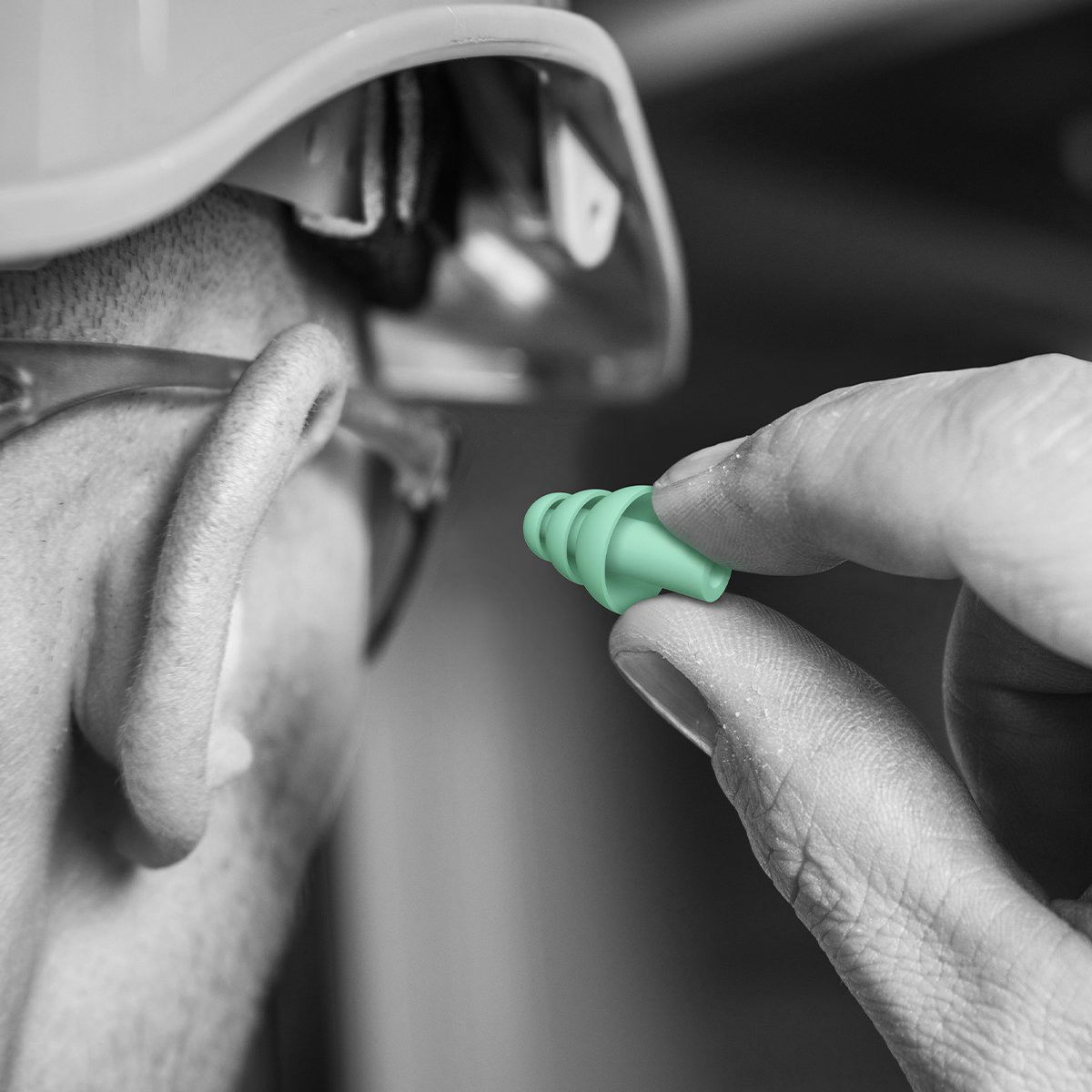
Yes, noise exposure at work can directly affect sleep quality. Workers who spend their days in loud environments often find it harder to fall asleep, stay asleep, and wake up feeling rested. The connection between occupational noise and fatigue is well established — the body’s stress response to loud sound carries over long after the shift ends, keeping the nervous system in a state of low-level alertness that disrupts nighttime recovery. Below, we break down exactly how this happens and what you can do about it.
How does noise exposure disrupt the sleep cycle?
Noise exposure disrupts the sleep cycle by activating the body’s stress response, raising cortisol and adrenaline levels even after the noise has stopped. These hormones signal alertness, making it harder to enter and maintain the deep, restorative stages of sleep. Workers exposed to high decibel levels throughout the day often experience fragmented sleep, even in a quiet bedroom.
Sleep is not a single state. It moves through several stages, including light sleep, deep slow-wave sleep, and REM sleep. Each stage plays a different role in physical and mental recovery. Prolonged noise exposure during the day can push the nervous system into a heightened state that shortens or suppresses slow-wave sleep, which is the stage most responsible for physical repair and immune function.
Even when a worker falls asleep without difficulty, the quality of that sleep may be lower than normal. They may spend more time in lighter sleep stages, wake more frequently, and feel groggy or unrested in the morning despite a full night in bed. This pattern is sometimes called non-restorative sleep, and it is closely linked to ongoing noise stress during waking hours.
Why are workers more vulnerable to noise-related sleep problems?
Workers in noisy industries are more vulnerable to sleep problems because they face prolonged, repeated noise exposure that accumulates over time. Unlike a single loud event, daily exposure to industrial machinery, heavy tools, or construction equipment keeps the auditory and nervous systems under sustained stress, making it harder for the body to fully unwind at the end of the day.
Occupational noise and fatigue are closely linked because the effort of processing loud sound throughout a shift is genuinely taxing. The brain works harder in noisy environments to filter relevant information from background noise, and that cognitive effort contributes to mental exhaustion by the end of the workday. Paradoxically, that same exhaustion does not always translate into better sleep — it can coexist with a nervous system that remains too activated to settle.
Shift workers face an additional layer of difficulty. Working irregular hours or overnight shifts already disrupts the body’s circadian rhythm, and when that disruption is combined with occupational noise exposure, the impact on sleep quality compounds significantly. The body loses two of its most important cues for when to rest and recover.
What are the long-term health effects of poor sleep caused by noise?
Long-term poor sleep caused by noise exposure is linked to a range of serious health outcomes, including increased risk of cardiovascular disease, weakened immune function, impaired cognitive performance, and higher rates of anxiety and depression. When sleep disruption becomes chronic, the body never fully recovers between shifts, and the effects accumulate over months and years.
From a cardiovascular standpoint, consistently poor sleep raises blood pressure and increases the body’s inflammatory response. Workers who already face physical demands on the job carry a heavier health burden when recovery sleep is compromised. Over time, this raises the risk of heart disease and metabolic disorders, including type 2 diabetes.
Cognitive effects are equally significant. Sleep is when the brain consolidates memory, processes information, and clears metabolic waste. Chronic sleep disruption impairs attention, reaction time, and decision-making, which matters not only for job performance but for safety. Workers in high-noise environments who are also chronically sleep-deprived face a meaningful increase in accident risk. The connection between occupational noise, fatigue, and workplace safety is one reason why hearing health at work deserves more attention than it typically receives.
Can hearing protection worn during the day improve sleep at night?
Yes, wearing effective hearing protection during the workday can improve sleep quality at night. By reducing the volume of noise the auditory and nervous systems are exposed to throughout a shift, quality earplugs lower the cumulative stress load the body carries into the evening. A nervous system that has not been pushed to its limits is better positioned to wind down naturally at bedtime.
The key word here is effective. Not all hearing protection performs equally. Foam or basic silicone earplugs reduce volume but often muffle sound unevenly, which can cause workers to remove them frequently or wear them incorrectly. Earplugs that preserve sound clarity while delivering genuine noise reduction are more likely to be worn consistently throughout a full shift, which is what makes the difference.
This is where the design of the earplug matters. Our Shush Worker earplugs are built specifically for this kind of all-day use. With an SNR of 23 dB, they reduce hazardous industrial noise to safe levels while keeping sound clear and natural, so workers can still communicate with colleagues without pulling them out. The durable synthetic rubber construction means they hold their shape and fit comfortably through a full shift, every day. When protection is comfortable and effective, workers actually use it consistently, and that consistent use is what reduces the cumulative noise burden that feeds into poor sleep.
What other strategies help workers sleep better after noise exposure?
Beyond wearing hearing protection at work, several practical strategies help workers sleep better after noise-heavy shifts. The most effective approaches focus on calming the nervous system before bed, creating a sleep environment that supports recovery, and building consistent sleep habits that counteract the disruption caused by occupational noise and fatigue.
Wind down before bed
Give your nervous system a clear signal that the workday is over. A wind-down routine of 30 to 60 minutes before sleep, involving low stimulation activities like reading, stretching, or a warm shower, helps lower cortisol levels and prepare the body for rest. Avoiding screens during this window reduces blue light exposure, which interferes with melatonin production.
Optimize your sleep environment
A cool, dark, and quiet room supports deeper sleep. If you live in a noisy area or work shifts that require sleeping during the day, blackout curtains and a white noise machine or fan can mask disruptive sounds without adding the kind of sharp, unpredictable noise that triggers the stress response. Keeping the room temperature on the cooler side also helps the body reach the deeper sleep stages faster.
Be consistent with sleep timing
The body’s internal clock is sensitive to timing. Going to bed and waking up at the same time each day, even on days off, reinforces the circadian rhythm and makes it easier to fall asleep and wake up naturally. For shift workers, this is harder to achieve, but even small steps toward consistency, like keeping wake times stable, can meaningfully improve sleep quality over time.
Watch what you eat and drink after a shift
Caffeine consumed in the afternoon or evening stays in the system for several hours and can delay sleep onset. Alcohol may feel like it helps you fall asleep faster, but it reduces sleep quality by suppressing REM sleep and causing more frequent waking in the second half of the night. A light meal after a shift, rather than a heavy one, also supports better sleep by reducing digestive load while the body is trying to rest.
Häufig gestellte Fragen
How many decibels of noise exposure does it take to start affecting sleep quality?
Research suggests that regular exposure to noise levels above 85 dB — common in industries like construction, manufacturing, and heavy equipment operation — is enough to trigger the sustained stress response that disrupts sleep. However, even moderate occupational noise in the 70–85 dB range can affect sleep over time if exposure is prolonged and daily. The cumulative effect matters more than any single day's exposure, which is why consistent hearing protection throughout every shift is so important.
I sleep a full 7–8 hours but still wake up exhausted after noisy shifts. What's going on?
This is a classic sign of non-restorative sleep — you're spending enough time in bed, but your body isn't cycling through the deep, restorative stages it needs. Prolonged noise exposure keeps your nervous system in a low-level state of alert that suppresses slow-wave sleep, meaning you spend more time in lighter sleep stages even when the bedroom is quiet. Addressing the root cause — reducing your daytime noise burden through quality hearing protection and practicing a proper wind-down routine — is more effective than simply spending more hours in bed.
Can noise-related sleep problems go away on their own if I change jobs or move to a quieter role?
Yes, in many cases sleep quality does improve when the source of chronic noise stress is removed, but the timeline varies depending on how long the exposure lasted and whether any hearing damage occurred. If the sleep disruption has been going on for months or years, the nervous system may need time to recalibrate, and good sleep hygiene habits will help speed that process along. If sleep problems persist for more than a few weeks after reducing noise exposure, it's worth speaking with a doctor to rule out other contributing factors like sleep apnea or anxiety.
Are there any supplements or sleep aids that help with noise-related fatigue?
Low-dose melatonin (0.5–3 mg) taken 30–60 minutes before bed can help signal to a stressed nervous system that it's time to wind down, and it's particularly useful for shift workers whose circadian rhythm is already disrupted. Magnesium glycinate is another option that many people find supports relaxation and deeper sleep without next-day grogginess. That said, supplements work best as a complement to the foundational strategies covered in this post — not as a replacement for reducing noise exposure at the source and building consistent sleep habits.
What's the best way to get started with hearing protection if I've never worn earplugs consistently at work?
The biggest barrier to consistent earplug use is usually discomfort or muffled sound quality, so the most important first step is finding a pair specifically designed for all-day wear in an industrial setting rather than grabbing whatever foam earplugs are available. Try wearing them for a full shift before judging the experience — most people need a short adjustment period. If you can hear your coworkers clearly and forget you're wearing them after the first hour, that's a sign you've found a good fit, and that comfort is what makes consistent, long-term use realistic.
Does noise-induced hearing loss make sleep problems worse over time?
Yes, and this is an often-overlooked connection. Workers who develop noise-induced hearing loss are at significantly higher risk of developing tinnitus — a persistent ringing or buzzing in the ears — which is itself a major driver of chronic sleep disruption. Unlike external noise, tinnitus is present even in a completely quiet room, making it much harder to manage at bedtime. Protecting your hearing now is one of the most effective ways to prevent a sleep problem that becomes much harder to treat down the road.
Should I talk to my employer about noise levels if I think they're affecting my health and sleep?
Absolutely — and in many workplaces, you have the right to. OSHA requires employers to implement hearing conservation programs when noise levels reach or exceed 85 dB as an 8-hour time-weighted average, which includes providing hearing protection, conducting noise monitoring, and offering annual hearing tests at no cost to workers. If you're experiencing persistent fatigue, sleep problems, or early signs of hearing loss, documenting your symptoms and raising the issue with your supervisor or safety officer is a legitimate and protected step. Your long-term health is worth the conversation.